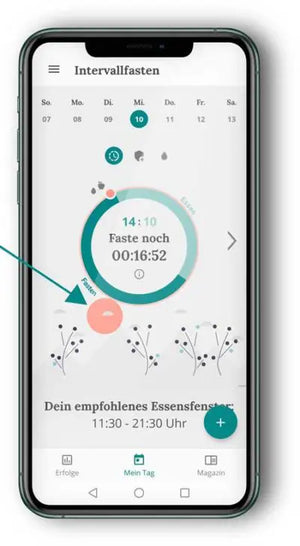
Autophagy is the process by which cells, in the absence of external energy (e.g., due to a lack of food), recycle their own usable components, such as misfolded proteins and other "cellular waste," in order to continue functioning. By breaking down this cellular waste, the cell is relieved of stress and, in a sense, rejuvenated. High levels of autophagy are a key goal of fasting.
Currently, intensive research is being conducted into how to measure the "level of autophagy." Our calculation is not an exact measurement, but rather a first step toward illustrating autophagy in one's own body and how it can be influenced.
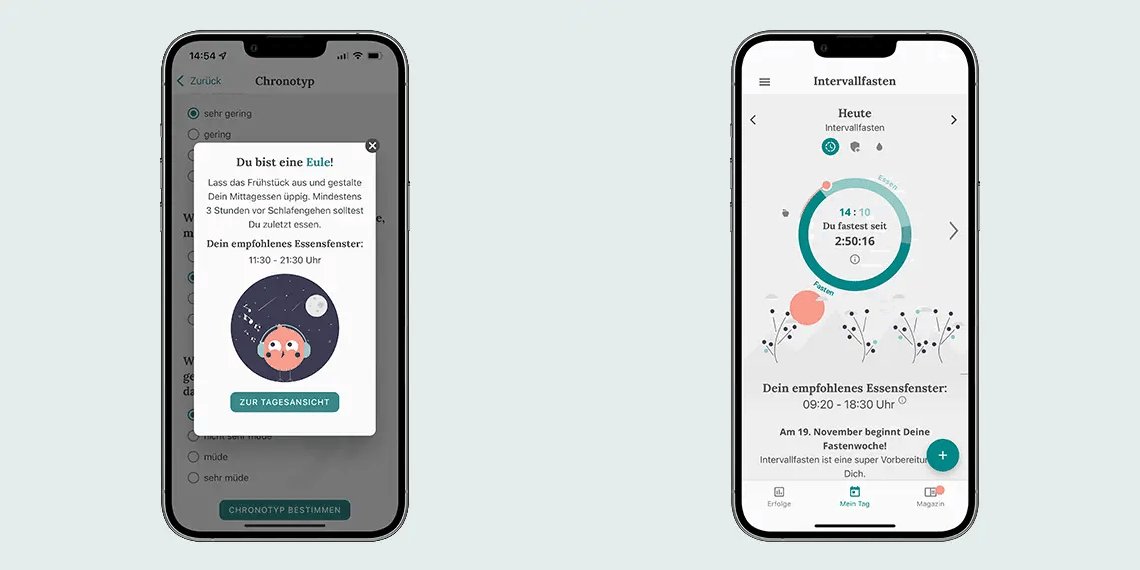
Many factors go into calculating autophagy, including the individual's basal metabolic rate, which we determine based on gender, age, and height. This is offset by the meals one eats (the calories provided to the cell as externally supplied energy). The frequency and timing of meal intake are crucial, as the body, according to its own rhythm (circadian rhythm), is better able to digest meals at certain times. We take this into account, among other things, in the recommended eating window and whether the meal is consumed within this window. Vegetarian or vegan meals also have a beneficial effect on autophagy.
To put it simply: When no more food is digested in the app and thus energy is supplied to the cells from outside, autophagy takes effect.